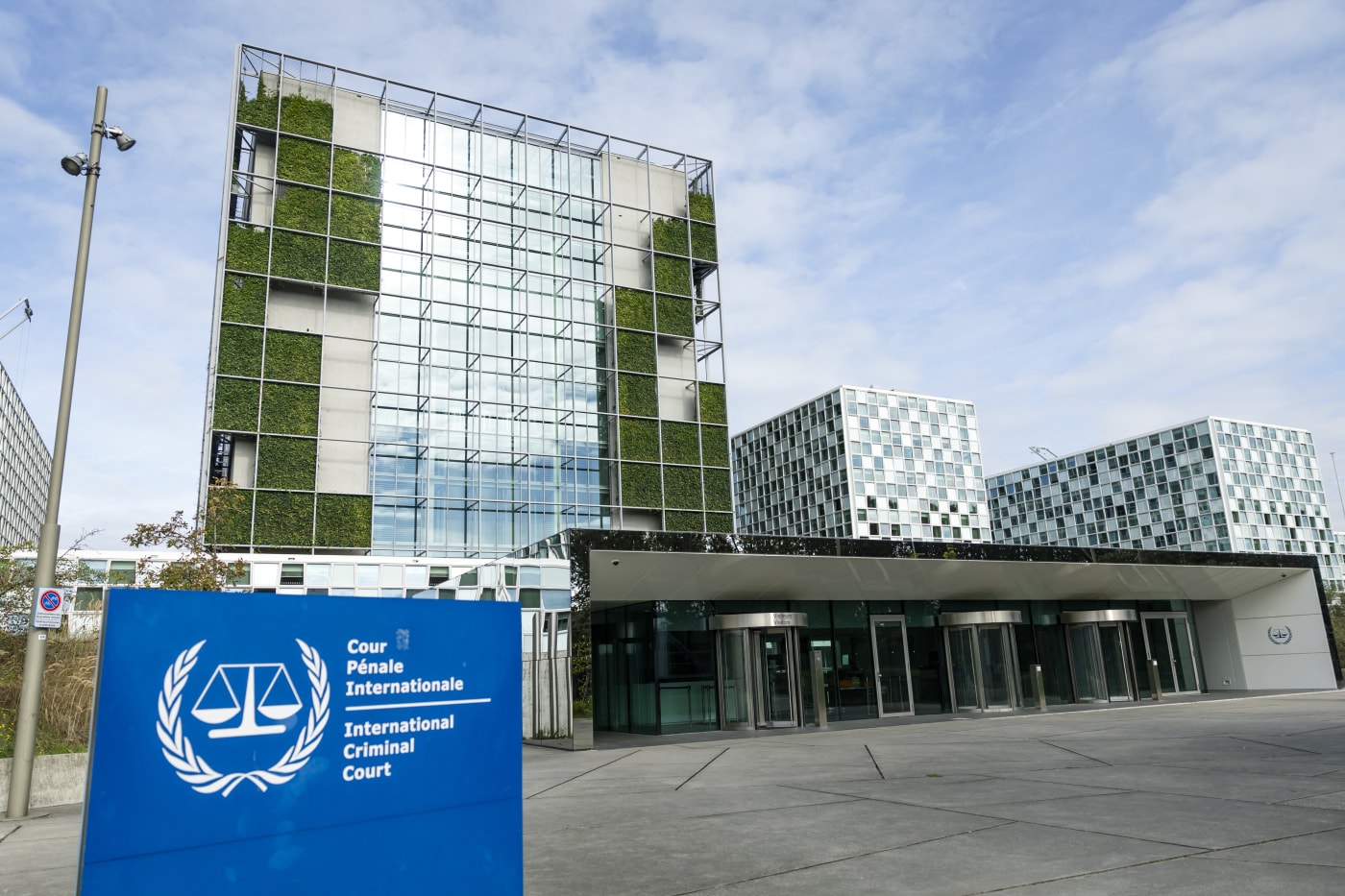
US sanctions on the ICC took effect on 9 October 2026, when Washington designated the International Criminal Court itself, not only its judges and prosecutors. A Treasury general licence keeps the court’s core operations legal until 7 April 2027, a window European officials have described as a six-month delay. That period gives the court’s 125 member states time to respond, and it makes this a test of international law.
What has Washington announced against the ICC?
Secretary of State Marco Rubio said the United States would ban transactions with the court, which he called rogue, to cut off its resources and limit its ability to operate. In a video statement he said, “Either the ICC will end its threats, or we will end the ICC,” as reported by Al Jazeera.
The designation rests on Executive Order 14203, signed on 6 February 2025. Section 1(a)(ii)(A) covers foreign persons who directly engaged in ICC efforts to investigate, arrest, detain or prosecute “protected persons” without their country’s consent. The order defines a person as an individual or an entity. That wording appears to be how the court itself falls within it, though this is TES’s reading of the text, not a legal finding.
The State Department statement says Washington had set out its expectations for over a year and deferred designating the court, but that neither the ICC nor its member states took meaningful steps. It says the action leaves those states room to negotiate. The statement names no case. Al Jazeera reports that the administration has pointed to the court’s Afghanistan investigation and its arrest warrants for Israeli Prime Minister Benjamin Netanyahu and former defence minister Yoav Gallant. The court has not sought to prosecute any US citizen, the same report notes. Netanyahu welcomed the move.
The designation is immediate, but it is softened by licences. Under the State Department’s fact sheet, Treasury issued a 180-day licence for maintaining the court’s operations, plus separate licences for IT services, the pension plan and detainee-related activity. Treasury’s licence text covers salaries and member-state payments through 7 April 2027.
Why do US sanctions on the ICC differ from earlier measures?
Earlier measures targeted people. The State Department says it had sanctioned 17 persons under the order before 9 October. They include the then prosecutor Karim Khan, named in the order’s annex, as well as judges, deputy prosecutors and, in August 2026, ICC president Tomoko Akane and trial lawyer Abdoulaye Seye.
| Date | Action | Target |
|---|---|---|
| 2 September 2020 | Asset freeze, first Trump administration | Prosecutor Fatou Bensouda and Phakiso Mochochoko |
| 6 February 2025 | Executive Order 14203 signed | Prosecutor Karim Khan (annex) |
| June and August 2025 | State Department designations | Judges and deputy prosecutors |
| 18 August 2026 | Further designations | ICC president Tomoko Akane, trial lawyer Abdoulaye Seye |
| 9 October 2026 | Designation of the institution | The ICC itself |
Why US sanctions on the ICC go further than the 2020 episode
Washington froze the assets of the then prosecutor over the court’s Afghanistan work in 2020. On 2 April 2021, the Biden administration lifted those measures, with Secretary of State Antony Blinken calling them “inappropriate and ineffective,” Reuters reported. A designation of the whole institution is harder to insulate against. Al Jazeera reports that the court has about 900 staff, and that companies serving it could now be penalised.
How much damage can the sanctions do to the court?
Politico reports that US sanctions on the ICC would create operational challenges, including paying staff, accessing IT services and maintaining detention facilities. The licences cover those areas for now, and the maintenance licence runs out on 7 April 2027. Al Jazeera adds that the sanctions block the court’s property in the United States and bar any provision of funds, goods or services to it, subject to the licences.
The court has had time to prepare. AP reports that the former prosecutor lost his Microsoft email and had bank accounts frozen after his 2025 designation, and that the court has since moved off Microsoft products to a German provider, citing staff who were not named. William Schabas, an international law professor, told Al Jazeera the court had prepared a fallback plan, including a move to European software. The Netherlands, the host country, is examining ways to keep staff and protected witnesses paid and the detention facility secure, AP says. Schabas said it remains to be seen how significant the sanctions prove.
What does the clash mean for the rules-based order?
The ICC called the sanctions an attack on the foundations of the international legal order and said “history will judge this moment,” in a statement carried by AFP through The Hindu. The court asked its 125 members to side with it, saying its fate rests partly in their hands.
Washington’s case for US sanctions on the ICC is that neither the United States nor Israel is a party to the Rome Statute and that Americans are not subject to the court’s jurisdiction. The legal fault line is narrower. Al Jazeera notes that the court has long held that crimes by US or Israeli nationals on the territory of a member state can be prosecuted. A 2002 US law already bars extradition of Americans to the court and authorises force if one is detained, which critics have nicknamed the Hague invasion clause.
Support among members is uneven. Al Jazeera reports that some are wary of what they call unequal application of international law, with offenders from the Global South more likely to face accountability. Chad and Venezuela moved to withdraw in July, following Burkina Faso, Mali and Niger. The announcement also came hours after former ICC judge Navi Pillay won the Nobel Peace Prize, a coincidence of timing that Politico and Al Jazeera both noted; no official link has been stated.
What the sanctions mean for South Asia
Afghanistan, Bangladesh and the Maldives are South Asian States Parties, according to the ICC’s Assembly of States Parties. India and Pakistan are not. For South Asia, US sanctions on the ICC matter first through Afghanistan, whose investigation Washington cites. For India, the episode adds to the unilateral-sanctions pressure TES has tracked in its coverage of India’s sanctions diplomacy, and fits the wider pattern of US pressure on allies reshaping the global order.
Can the EU blocking statute shield the ICC?
The European Union’s blocking statute can protect European staff by stopping European companies from complying with US measures. AP reports it is unclear whether it covers the ICC, because the court is an international body, not a European one. Dutch Foreign Minister Tom Berendsen has asked the European Commission to prepare the measure, Politico reports, but an EU diplomat who was not named said there is no appetite to trigger it at once.
The Netherlands also faces direct pressure. AP reported in September, citing unnamed officials, that US officials encouraged the host state to withdraw from the court. Dutch Prime Minister Rob Jetten said his government would work over the next six months to prevent US sanctions on the ICC from being implemented by April 2027. EU foreign ministers meet in Luxembourg on Monday, 12 October 2026, and a senior EU official said Brussels would follow The Hague’s lead.
The reach of US sanctions on the ICC will depend on who stays in. Most of Europe, Latin America and large parts of Africa remain members, as do Canada and Australia, Al Jazeera notes. Mark Kersten, an international law specialist, told the outlet the court’s survival depends on concrete action by those states. For readers following India’s strategic autonomy, the outcome is a useful marker of how far middle powers will resist US pressure.
What to watch before April 2027
Five markers will show how US sanctions on the ICC play out:
- The Luxembourg meeting on 12 October, and whether the blocking statute is triggered.
- Whether Treasury extends the 180-day maintenance licence before it expires on 7 April 2027.
- New US designations, including of companies serving the court.
- Further member-state withdrawals.
- Challenges in US federal courts by sanctioned judges and rights groups, which Al Jazeera says are under way.
US sanctions on the ICC are in force, but the court’s core operations are licensed until April 2027, and the court says it will carry on. Both facts keep the outcome open. What is settled is the direction of policy: Washington has moved from targeting individuals to targeting an institution, and Europe has about six months to respond.
Source note: US State Department statement and fact sheet, Treasury licence and Executive Order 14203; reporting by Al Jazeera, AP, Politico, Reuters and AFP; ICC Assembly of States Parties records.