
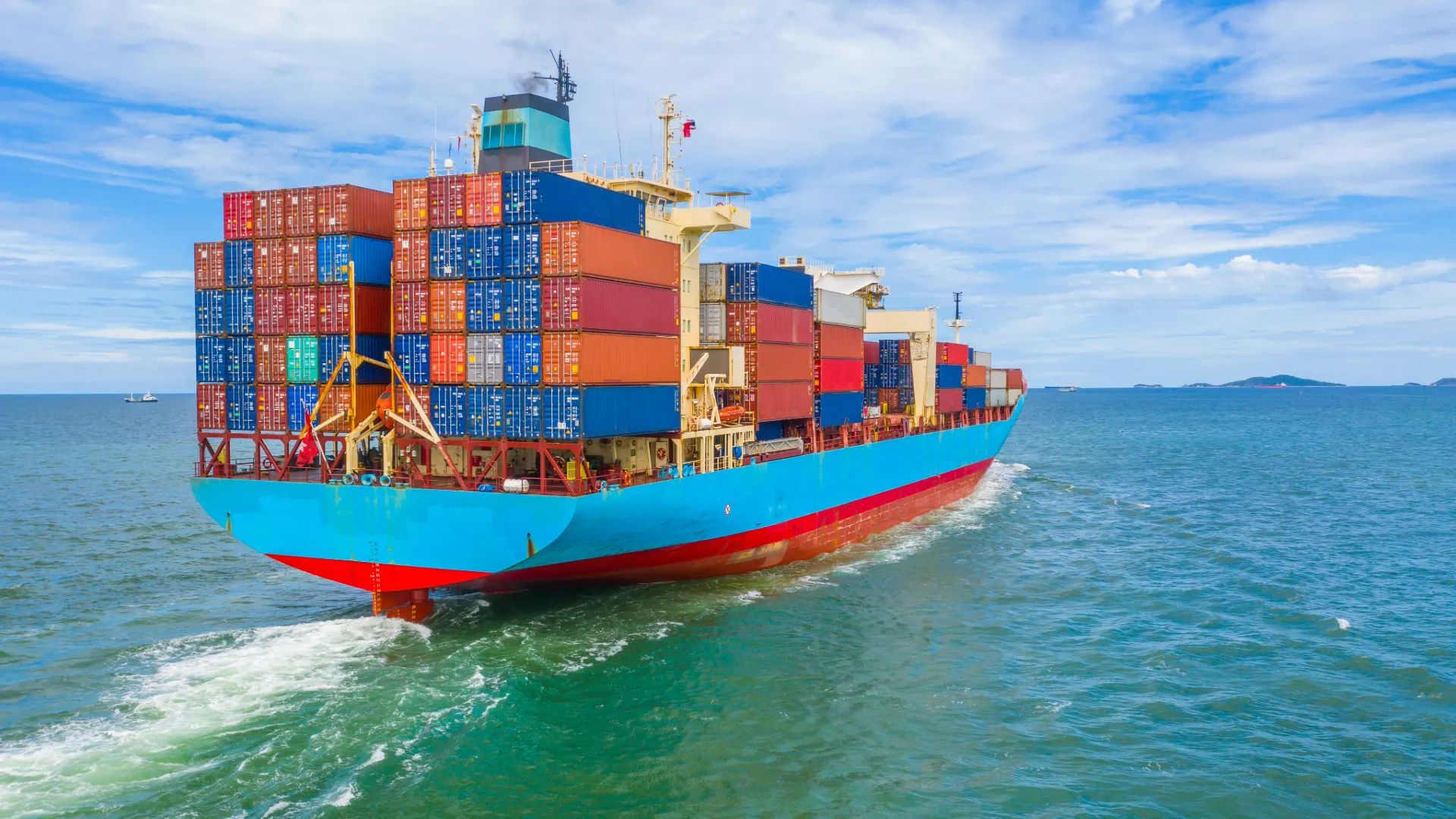

In July 2024, a tonne of sulphur delivered to Indonesia cost $101. By 28 May 2026, a tonne delivered to Brazil was assessed at $1,200. The routes differ, the direction is the same, and between them sit a nickel boom, a war, five export curbs and a fertiliser industry that began switching off plants.
Sulphur is the pale yellow by-product that refiners strip from oil and gas so the fuels can be sold. Almost nobody tracked it, and it now decides the price of the phosphate fertiliser behind much of the world’s food. For India, the sulphur shortage shows up in a budget line: the fertiliser subsidy.
Key takeaways
- Sulphur — a by-product refiners strip from oil and gas — became the bottleneck behind phosphate fertiliser. A tonne delivered to Indonesia cost $101 in July 2024; a tonne delivered to Brazil was assessed at $1,200 by 28 May 2026.
- Five producers curbed exports between November 2025 and July 2026, andabout half of global seaborne sulphur exports behind the Strait of Hormuz. — so the war that began on 28 February cut supply at the chokepoint.
- India imports most of its sulphur from the Middle East. With the retail price of DAP held at ₹1,350 a bag, the cost surfaces in the fertiliser subsidy, which Business Standard reports could approach ₹3 trillion.
- Urea, not sulphur, takes most of that bill: ₹1.16 trillion of the ₹1.7 trillion budgeted. Sulphur’s cost falls on the smaller phosphate and potash share.
Why does a refinery waste product decide fertiliser prices?
Most sulphur is recovered from oil and gas processing, then turned into sulphuric acid, which dissolves phosphate rock into fertiliser that plants can absorb. University College London (UCL) researchers put the oil-and-gas share at more than 80 per cent of supply. By UCL’s 2022 estimate, the world uses more than 246 million tonnes of sulphuric acid a year, and phosphate fertiliser is its largest consumer.
The ratio explains why a waste product can move a food price. Mosaic, the phosphate producer, says every 10 tonnes of DAP (diammonium phosphate) or MAP (monoammonium phosphate) needs 4 tonnes of sulphur, in a note reported by S&P Global Energy.
Geography completes the chokepoint. S&P Global CERA data puts about half of global seaborne sulphur exports behind the Strait of Hormuz. The Gulf producers hold the sulphur because their oil and gas are sulphur-rich, and they must remove it to sell them. Together, the ratio and the geography are why the sulphur shortage reaches a fertiliser bag so quickly.
How did sulphur go from $101 to $1,200 a tonne?
The war did not start the price climb. The rally began in 2024, driven by Indonesia’s nickel refiners, which use sulphur to leach the metal from ore. Argus Media reported that the Indonesian CFR price rose 440 per cent between 4 July 2024 and 29 January 2026, from $101 to $554 a tonne. In February 2026, Itafos, a US phosphate producer, described global sulphur prices as loitering around $500 a tonne, with the sulphur-to-phosphate price ratio at an all-time high.
The war began on 28 February 2026, when the US and Israel struck Iran, and the Gulf supply that fed the market was cut. The result was record prices by the end of May. A June ceasefire let some stranded cargoes through the strait, but it later collapsed and freight costs rose again.
FOB (free on board) is the price at the loading port. CFR (cost and freight) includes shipping to the destination. The figures are not directly comparable and are shown as reported.
| Date | Benchmark | Price per tonne | Source |
|---|---|---|---|
| 4 July 2024 | CFR Indonesia | $101 | Argus Media |
| 29 January 2026 | CFR Indonesia | $554 | Argus Media |
| February 2026 | Most major indexes | About $500 | Itafos |
| 26 February 2026 | CFR Brazil | $525 (pre-war) | Platts (S&P Global Energy) |
| 28 May 2026 | FOB Middle East | $815–$820 (record at the time) | Platts (S&P Global Energy) |
| 28 May 2026 | CFR Brazil | $1,200 (record) | Platts (S&P Global Energy) |
| 18 June 2026 | FOB Middle East (excl. Iran) | $845–$850 | Platts (S&P Global Energy) |
| August 2026 | CFR India | About $1,050 | Business Standard |
Itafos chief executive David Delaney said in late July that the sulphur shortage had left about 45 per cent of globally traded sulphur stuck behind Hormuz. He put delivered prices at $1,000 to $1,200 a tonne and said that level makes phosphate production largely uneconomic.
Which export curbs turned a shortage into a scramble?
Five producers restricted exports between November 2025 and July 2026, which removed the supply that might have filled the Gulf gap.
| Country | Measure | Status |
|---|---|---|
| China | Halt on exports of sulphuric acid from copper and zinc smelting, reported 10 April 2026, effective May | No official announcement; ING’s Greater China economist Lynn Song expected a de facto suspension; CRU describes the ban as running May to December |
| Russia | Ban on sulphur exports from 1 November 2025 after drone strikes on gas plants; acid export ban signed 12 September 2026 | Both run to 31 December 2026. Since 21 August, up to 300,000 tonnes of low-grade sulphur may be exported with a permit; acid exports need approval from the prime minister or a deputy |
| Turkey | Sulphur export ban from 7 April 2026, after its agriculture ministry cited a 35–40 per cent price rise | Second and third quarters of 2026, as reported in April |
| Kazakhstan | Suspension of all sulphur exports from 27 June 2026, exempting rail shipments into Russia | Until further notice, under the June order |
| India | Sulphur exports suspended, according to Argus | No official document published; mainly affects Reliance Industries, which loads at Bedi |
China was the world’s largest sulphuric acid exporter in 2025, shipping 4.65 million tonnes, up 73 per cent, according to Exiger. Russian gas sulphur output fell 19 per cent in January to May 2026 to about 1.75 million tonnes, according to Rosstat data reported by ChemAnalyst. A trader quoted by S&P Global put the Astrakhan gas plant, hit by drone strikes, at 60 per cent of Russia’s sulphur output; BC Insight puts it at over 60 per cent. Separately, Russia barred Kazakh sulphur from moving by rail to Russian ports between 24 May and 24 July. Argus, BC Insight, Interfax and Shanghai Metals Market document the Turkish, Russian, Kazakh and acid-ban details.
Who is hurt first? Phosphate makers and Brazil
The sulphur shortage hit phosphate producers first, and the effect shows in output. Mosaic temporarily halted phosphate rock production at its Catalão mine for 45 days and at its Tapira mine for 30 days from 1 June 2026, citing sulphur supply and cost. The company said sulphur costs had risen nearly 1,100 per cent, from about $100 to more than $1,200 a tonne, and called it the most severe sulphur crisis since 2008. In July it extended both shutdowns and announced a gradual hibernation of its Uberaba complex from September. It later said Brazilian phosphate production would stay halted until sulphur supply normalises.
Brazil is the most exposed large importer. According to S&P Global CERA, Middle Eastern sulphur made up 42 per cent of Brazil’s sulphur imports in 2025. Kazakhstan was Brazil’s main supplier in January to May 2026, with 39 per cent, according to Argus, before it suspended exports. Brazil imports about 85 per cent of its phosphate needs, according to American Ag Network’s report on Delaney’s interview. Felipe Coutas, Itafos’s country manager in Brazil, told an Argus event on 6 April that 2026 was a year of survival and that “there may not be any product at all”.
Delaney has also said he has heard that up to 40 per cent of Brazilian acreage may not receive phosphate this year. That is a secondhand estimate and TES has not found harvest data to confirm it.
In an interview published on 27 August, Delaney said the normal market response is not working. High fertiliser prices would usually bring more production and more imports. Here sulphur and acid costs are so high that some plants cannot profitably run even at today’s fertiliser prices.
The bidding war the public never sees follows the same logic. Battery-metal processors use sulphuric acid to leach nickel and cobalt, and they can pay more for it than fertiliser makers can. UCL co-author Dr Simon Day has warned that green technology could outbid the fertiliser industry for scarce acid, with food production in developing countries bearing the cost.
What does the sulphur shortage mean for India’s fertiliser subsidy?
India is the clearest case of the sulphur shortage moving from the market into the budget. Farmers have been shielded at the shop. The Treasury is paying.
The exposure. India imported 2.25 million tonnes of sulphur in 2025, and about 84 per cent came from the Middle East, according to Argus. Imports fell 26 per cent to 698,200 tonnes in January to May 2026. The Fertiliser Association of India estimated, as reported, that about 52 per cent of the fertiliser sector’s sulphur requirement was imported in 2024-25.
The price. Business Standard reported on 4 October that sulphur landed in India at about $1,050 a tonne in August, up 262 per cent from a year earlier. Landed DAP was about $925 a tonne, up 14.34 per cent.
Put those two numbers together using Mosaic’s ratio of 4 tonnes of sulphur to 10 tonnes of DAP. At $1,050 a tonne, sulphur alone adds about $420 to the cost of a tonne of DAP, roughly 45 per cent of its landed price. At the $100 sulphur of 2024, the same input added about $40. That is TES arithmetic on reported figures, and a plant’s actual cost will differ.
The shield. The government kept the retail price of DAP at ₹1,350 per 50-kg bag, according to the East Asia Forum. Business Standard reports that the subsidy per bag rose from ₹2,192 before the West Asia crisis to more than ₹3,523 after, an increase of 60.72 per cent.
The bill. Budget 2026-27 allocated ₹1.71 trillion (₹1.71 lakh crore) to fertiliser subsidy. Aparna S Sharma, an additional secretary in the Department of Fertilisers, said in May that it might rise by ₹70,000 crore to ₹2.41 trillion. She attributed the rise to the import costs of urea and other fertilisers. By October, Business Standard was reporting that the requirement could approach ₹3 trillion (₹3 lakh crore), about 76 per cent above the budget estimate. Joint Secretary Krishna Kant Pathak has said the bill could pass ₹3 trillion, citing urea, LNG and phosphate prices. Of the ₹1.7 trillion budgeted, ₹1.16 trillion was for urea and ₹54,000 crore for phosphate and potash fertilisers, the share where sulphur’s cost falls. CareEdge Ratings has said the immediate problem is rising input cost, with fertiliser still available.
The policy response. A Department of Fertilisers document dated 14 August, reported by BC Insight, proposes a 20 per cent subsidy on purchases of sulphur and sulphuric acid, tied to floor prices of $800 and $266.67 a tonne. It was awaiting Cabinet approval and would apply from June 2026 to March 2027 if cleared. India also suspended its own sulphur exports. According to Argus, that mainly affects Reliance Industries, which loads its cargoes at Bedi on the west coast.
TES has examined India’s ₹37,500 crore coal gasification scheme, which targets energy, steel and agricultural inputs. For readers tracing the same chokepoint in oil, see TES’s analysis of Hormuz oil flows and the wider Hormuz crisis.
Why was the shock waiting to happen?
The two wars, in the Gulf and in Ukraine, exposed a fragility that was already built in. A 2022 UCL study in The Geographical Journal by Mark Maslin, Livia Van Heerde and Simon Day projected sulphuric acid demand rising from more than 246 million tonnes to 400 million tonnes a year by 2040. It estimated an annual supply shortfall of 100 to 320 million tonnes, or 40 to 130 per cent of current supply, depending on how fast decarbonisation proceeds.
The logic is circular. The world is building a low-carbon economy with a chemical that comes mostly from the high-carbon one it is shrinking. Direct mining of sulphur is the fallback, and Maslin called that route dirty, toxic, destructive and expensive. The authors suggest cutting demand through recycling phosphorus from wastewater and recycling lithium batteries.
The 2026 crisis is a live test of that thesis, pulled forward by a war. It does not prove the 2040 numbers, which rest on scenarios.
What should readers watch?
- Hormuz sulphur flows. Kpler estimates that oil and product flows through Hormuz had recovered to about 80 per cent of pre-war levels by early October, according to Gulf News. TES found no equivalent public series for sulphur.
- 31 December 2026. Russia’s sulphur and acid export bans are due to lapse unless extended.
- Kazakhstan’s suspension. The June order runs until further notice.
- China’s acid exports. Any easing of the May halt would relieve copper and fertiliser buyers first.
- India’s Cabinet decision. The sulphur and acid subsidy proposal, and a revised subsidy figure, would show the size of the fiscal hit.
- Itafos and Mosaic output. Delaney has said the shortage could stretch into 2027.
Common questions
Why did sulphur prices rise in 2026? A rally driven by Indonesian nickel refining was already under way, and Russia had restricted sulphur exports from November 2025. The war that began on 28 February then cut Gulf supply, and curbs by China, Turkey, Kazakhstan and India followed.
How does sulphur affect fertiliser prices? Sulphur becomes sulphuric acid, which processes phosphate rock into fertiliser. About 4 tonnes of sulphur go into every 10 tonnes of DAP or MAP, so a sulphur spike raises phosphate costs directly.
How does the sulphur shortage affect India? India imports most of its sulphur from the Middle East. The government held retail DAP at ₹1,350 a bag, so the cost shows up in the subsidy bill, which Business Standard reports could approach ₹3 trillion. Urea, not sulphur, takes most of that bill: ₹1.16 trillion of the ₹1.7 trillion budgeted.
When will sulphur prices ease? TES found no reliable forecast. The Itafos chief executive has warned the shortage could extend into 2027, and Russia’s bans run to the end of 2026.
The takeaway
Sulphur was a waste product until it became a bottleneck, and the sulphur shortage is now visible in India’s budget as much as in the price of a bag of fertiliser. Subsidy shields the farmer for a season. Sooner or later the Treasury, the producer or the consumer has to absorb the difference.
The 2026 episode also leaves a question for planners. A food system that depends on a by-product of an industry it is trying to shrink needs a second source, whether that is recycling, a strategic stockpile or a different process. Few had a plan for sulphur before this year.
Source transparency. Reported by named sources: Argus Media on Indonesia prices, India’s imports and export suspension, Turkey’s ban and Brazil’s import mix; Platts (S&P Global Energy) on record prices, the Mosaic halts and their extension, and Mosaic’s 4-to-10 ratio; Business Standard on Indian landed prices and subsidy per bag; East Asia Forum on India’s retail DAP price; BC Insight on Turkey, Russia, the Astrakhan share and the Department of Fertilisers proposal; Interfax on the Russian sulphur and acid bans; Shanghai Metals Market on Kazakhstan’s suspension and the Russian rail block; AgFeed on the 6 April Argus event; Department of Fertilisers officials on the subsidy bill; Itafos executives (as quoted in Argus, Brownfield and American Ag Network); UCL on the 2022 study. TES arithmetic and assessment: the sulphur cost per tonne of DAP, the reading of the subsidy as a fiscal transfer, and the 2040 interpretation. Dropped from the original because TES could not verify them: the Morocco OCP supply gap, the electronic-grade acid exemption, and the $185–240 forecast for 2027. Reported but not independently confirmed: the Business Standard landed-price and per-bag subsidy figures; the 40 per cent Brazilian acreage estimate; Delaney’s $1,000–$1,200 delivered-price remark; the CareEdge Ratings comment; the Fertiliser Association of India’s 52 per cent share; and the Kpler Hormuz recovery figure.
Editor’s note. This article is analysis, not investment advice. It discusses commodity and fertiliser prices generally; readers should consult a qualified adviser before acting on any market view.
Ramkumar Valakeerthi is a Hyderabad-based strategy and analytics professional. He works on profitability and EBITDA at Telstra, spent five years at Deloitte before that, and has held analytics roles at Moody’s Analytics and Zeta Global. LinkedIn
The views of the author are his own.