
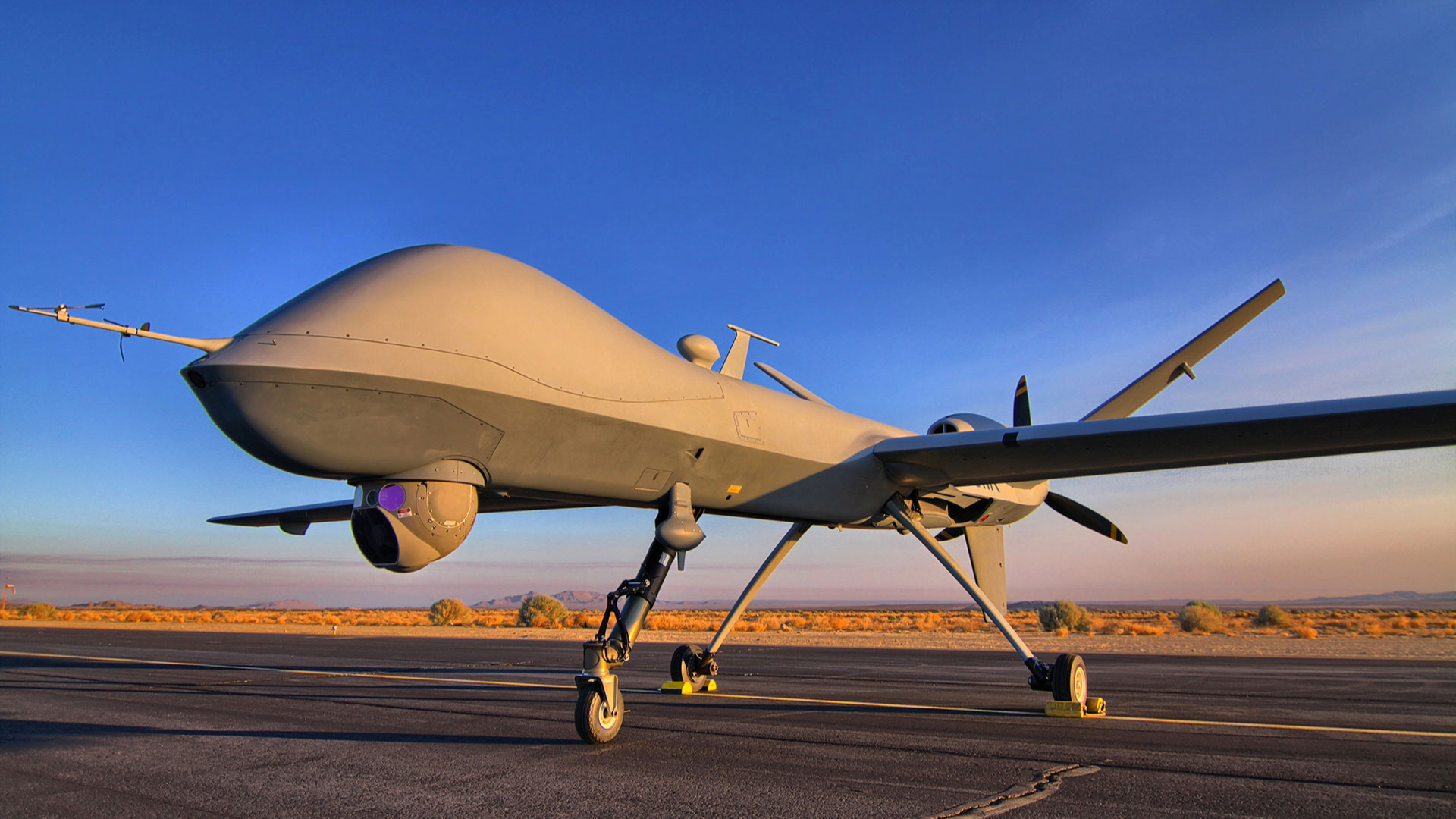
New Delhi’s newest defence contract costs less than what India spends on wheat subsidies in a fortnight — and that is exactly why it matters. On 17 August 2026, the Ministry of Defence signed a Rs 1,943 crore MQ-9B Sea Guardian lease with General Atomics Aeronautical Systems, adding two more surveillance drones for the Indian Navy over a 30-month term. Buried in that modest figure is a story about how India buys weapons it will not receive for years, and who stands to gain from the wait.
The Contract, In Plain Terms
According to the Ministry of Defence’s official statement, the contract was signed at Kartavya Bhawan-2 in New Delhi in the presence of A Anbarasu, Additional Secretary and Director General (Acquisition) in the Department of Defence. It covers two MQ-9B Sea Guardian High-Altitude Long-Endurance Remotely Piloted Aircraft Systems, leased rather than bought, for 30 months, at a value of roughly Rs 1,943 crore.
This is not India’s first encounter with the platform. The Navy has operated two Sea Guardians on lease since November 2020, using them for maritime surveillance across waters the Indian Ocean Region shares with a steadily more active Chinese navy. One of those original two was lost in a controlled ditching into the Bay of Bengal after a technical snag; General Atomics replaced it under contract terms. The new lease effectively doubles the leased fleet to four aircraft, each capable of flying for roughly 35 to 40 hours at a stretch while streaming real-time video and radar imagery back to shore.
India’s MQ-9B timeline: from a two-drone lease in 2020 to a 31-aircraft owned fleet by 2030
Why the MQ-9B Sea Guardian Lease Fills a Three-Year Gap
Here is the part that makes this contract more interesting than its price tag suggests. India is not leasing these drones because it lacks a bigger plan. It already has one — a much bigger one.
In October 2024, following clearance from the Cabinet Committee on Security, India signed a tri-service Foreign Military Sales agreement with the United States government for 31 armed MQ-9B drones, a deal the US State Department had approved in February that year at an estimated cost of 3.99 billion dollars. Fifteen of those drones, the armed Sea Guardian variant, go to the Navy. The Army and the Air Force get eight Sky Guardians each. The package includes 170 AGM-114R Hellfire missiles and 310 GBU-39B laser-guided small diameter bombs, along with a maintenance, repair and overhaul facility that General Atomics is building in India for the first time outside the United States.
None of that fleet exists in Indian hands yet. Deliveries begin only in January 2029, with the full complement arriving by September 2030. That is a three-year wait between signing a cheque for a 31-aircraft armed fleet and seeing the first one land on an Indian runway.
Maritime domain awareness over the Indian Ocean cannot simply pause for three years. Chinese research and survey vessels, along with People’s Liberation Army Navy warships, have become a near-continuous presence in the wider Indian Ocean Region over the past decade, operating out of dual-use port facilities Beijing has helped build along the region’s periphery. That trend has not reversed. Leasing two more unarmed Sea Guardians now is the stopgap that keeps Indian eyes on the water while the owned fleet is still being built.
The Ladakh Line That Still Runs Through This Deal
It is worth remembering where India’s appetite for this aircraft actually began. The original 2020 lease did not emerge from a routine modernisation review. It followed the Galwan Valley clash of June 2020, when Indian and Chinese soldiers fought hand to hand along a disputed Himalayan ridge and twenty Indian soldiers died. New Delhi’s armed forces spent the following months reassessing surveillance gaps across every contested frontier, not just the land border. Within five months, the Navy had two Sea Guardians in the air over the Indian Ocean.
Six years on, the logic has not changed, only the scale. A single crisis prompted a two-aircraft lease. A sustained regional contest has now produced a 33-aircraft programme, of which the newest two are simply the fastest way to keep watching while the rest gets built.
Where Bharat Forge, HAL and BEL Fit In
This is where the story stops being only about drones and starts being about India’s defence-manufacturing base — and, by extension, about companies whose shares trade on Dalal Street every day.
The 31-aircraft programme is not a straightforward import. According to General Atomics executives, cited in Indian defence trade publication reporting, the company has committed to assembling 21 of the 31 drones inside India, with roughly a third of each aircraft’s components sourced domestically. Bharat Forge, the Pune-headquartered forgings and precision-engineering group, is manufacturing landing gear components and related subassemblies under a partnership announced back in early 2023. Hindustan Aeronautics is expected to bring its own MRO experience to the programme, while Bharat Electronics is pencilled in for avionics and systems integration work. Industry reports put a separate depot-level maintenance facility contract at roughly Rs 4,000 crore, though the Ministry of Defence has not published that figure directly.
The Market Read
Bharat Forge shares were trading at roughly Rs 2,091 on the NSE on the afternoon the lease was signed, up marginally from the previous close of Rs 2,065, with a market capitalisation near Rs 99,000 crore. The stock has climbed more than 75 per cent over the past year, helped along by a defence order book that stretches well beyond this one programme — artillery systems, naval forgings, and a broader Make in India push across aerospace components. The MQ-9B assembly work is one contributor to that story, not the whole of it, and a single day’s lease announcement for two aircraft is unlikely to move a mid-cap engineering company’s valuation on its own.
The more durable signal for anyone tracking India’s defence-industrial stocks is the indigenisation ratio itself. Thirty-four per cent local content on a marquee American platform, on a programme this size, sets a benchmark that future Foreign Military Sales negotiations will be measured against. If Bharat Forge, HAL and BEL execute cleanly on the MQ-9B assembly work, it strengthens their case for the next tri-service import deal that comes with a Make in India clause attached.
The Irony Sitting Next Door: A Tariff Wall on India’s Own Drones
There is an uncomfortable contrast sitting right beside this lease. Even as India signs contracts to import American-made unmanned aircraft, the United States has just shut a large part of its own market to Indian-made drones. A presidential proclamation signed on 13 August 2026 imposes tariffs of up to 100 per cent on imported drones and components, with India left out of the preferential list that covers the European Union, Japan and several other partners. The measure takes effect on 3 September.
Washington, in other words, wants to sell India armed high-altitude drones while keeping Indian-built drones largely out of the American market. That asymmetry will not derail the MQ-9B programme, but it is exactly the kind of detail that gets lost in coverage focused only on the lease value, and exactly the kind of detail that belongs in any serious account of where India’s unmanned systems industry actually stands today.
What to Watch
No. The lease covers unarmed, surveillance-configured aircraft, distinct from the 31-drone Foreign Military Sales package that includes Hellfire missiles and precision-guided bombs for the Army, Navy and Air Force.
General Atomics and the Ministry of Defence have set January 2029 for the first unit, with the full 31-aircraft fleet arriving by September 2030 under the tri-service agreement signed in October 2024.
Bharat Forge is manufacturing landing gear and related components, Hindustan Aeronautics is contributing MRO expertise, and Bharat Electronics is expected to handle avionics and systems integration, together targeting roughly 34 per cent indigenous content across 21 of the 31 aircraft.
A two-aircraft lease worth Rs 1,943 crore will not reshape India’s maritime posture on its own. What it reveals is more interesting than what it changes: a Navy stretching a six-year-old stopgap to cover a three-year wait, a domestic industrial base being built in parallel with every import contract it signs, and a bilateral relationship confident enough to sell India armed drones while nervous enough to tariff the ones India builds itself.
Source Transparency
Verified fact: Contract signing date, venue, signatory, lease duration and value are drawn from the Ministry of Defence’s own statement, corroborated by wire coverage (ANI) and confirmed independently across two additional outlets. Official statement / company claim: Details of the 31-aircraft Foreign Military Sales programme, indigenisation percentage, and the MRO facility contract value are drawn from General Atomics executive statements and Indian defence trade publications; the Ministry of Defence has not published the local-content or MRO figures directly, and this is flagged accordingly in the text. Market data: Bharat Forge share price and market capitalisation reflect intraday NSE figures on 17 August 2026 and will move after publication. TES Analysis: The framing around a “three-year gap,” the Galwan-to-Ladakh throughline, and the tariff-wall contrast represent independent editorial analysis connecting verified facts, not official government characterisations.